Board Mount Power Supply Accessories: Essential Guide, Basics, and Key Insights
Board mount power supply accessories are components designed to support, stabilize, and enhance the operation of power modules installed directly on printed circuit boards (PCBs). These accessories exist because modern electronic devices rely on stable, efficient, and compact power systems that can operate reliably in a wide range of environments.
As electronics become smaller and more integrated, the demand for precise power management systems, voltage regulation mechanisms, and current monitoring components continues to rise.
These accessories include PCB terminals, mounting brackets, protective covers, heat dissipation components, filter modules, wiring adapters, insulating materials, and hardware designed to secure or complement power conversion units. Whether used in embedded systems, consumer devices, automation equipment, communications hardware, or industrial instrumentation, they help maintain stable electrical performance and technical reliability.
A combination of electrical engineering requirements and practical design needs has led to a broad ecosystem of components that ensure proper connectivity, electrical safety, mechanical support, and long-term device durability. Their evolution aligns closely with advances in semiconductor design, power density improvements, and stricter expectations for energy efficiency technology.
Importance
Board mount power supply accessories matter today because nearly every modern device depends on regulated and reliable power. These accessories directly influence performance, thermal stability, energy efficiency, and long-term system reliability. High-precision electronics such as IoT equipment, sensors, industrial automation systems, and communication networks rely heavily on consistent voltage levels and clean power signals.
Who They Affect
-
Engineers and designers who integrate power modules into complex systems.
-
Manufacturers building compact devices requiring stable power distribution.
-
Technicians and maintenance teams working on electronics that need durable components.
-
Students and learners studying PCB design, circuit protection, and embedded systems.
Problems They Help Solve
-
Thermal issues by using heat sinks, thermal pads, and airflow-optimized mounting hardware.
-
Electrical noise and instability through EMI filters, capacitive modules, and grounding accessories.
-
Space constraints with small-footprint connectors, slim terminals, and low-profile brackets.
-
Mechanical stress by using secure mounts that protect power units from vibration or movement.
-
Circuit protection needs with fuses, isolation components, and surge-handling accessories.
The combination of structural and electrical support offered by these accessories helps ensure efficient energy use, stable current flow, improved power integrity, and safe operation across a broad range of electronic applications.
Recent Updates
Recent advancements reflect growing demand for compact systems, improved energy efficiency, and stronger performance requirements. Over the past year, several trends have shaped how board mount power supply accessories are designed and used.
Key Trends from the Past Year
-
Miniaturization of power components (2024–2025): The push toward smaller controllers and converters has increased interest in low-profile mounting hardware and high-density PCB terminals.
-
Improved thermal management technologies (2024): New thermally conductive pads and micro heat-spreader materials help stabilize high-power systems in compact enclosures.
-
Greater focus on electromagnetic compatibility (2025): Updated design practices and improved EMI filtering accessories help reduce interference in communication-heavy devices.
-
Growth in renewable and energy-efficient electronics (2024–2025): Increased production of efficient power conversion systems has led to broader use of optimized connectors and insulation accessories.
-
Enhanced current monitoring and sensor integration (2024–2025): Accessories designed for high-accuracy current sensing align with stricter performance expectations in automation and control systems.
Example Table: Common Accessory Types and Their Functions
| Accessory Type | Primary Function | Typical Application |
|---|---|---|
| PCB Terminals | Secure electrical connection | Controllers, IoT boards |
| Mounting Brackets | Mechanical support | Power modules, converters |
| EMI Filters | Noise reduction | Communication devices |
| Heat Sinks | Thermal regulation | High-power circuits |
| Insulation Barriers | Electrical isolation | Industrial equipment |
These updates highlight how board mount accessories continue to evolve with new technology and broader system requirements.
Laws and Policies
Board mount power supply accessories are influenced by international electrical standards, environmental regulations, and safety frameworks. While the accessories themselves may not always be directly regulated, their materials, construction, and performance must align with broader rules governing electronic components.
Key Policies and Standards
-
IEC Electrical Safety Standards: Many accessories must comply with IEC-based frameworks covering insulation, circuit protection, and power distribution safety.
-
RoHS Compliance: Accessories used in PCBs must follow restrictions related to hazardous substances, especially for solderable components or insulating materials.
-
EMC Directives: Designs that include EMI filters or shielding elements must follow guidelines to limit electromagnetic interference.
-
Thermal and fire-safety standards: Materials such as insulating barriers or heat-dissipation parts often align with UL94 flammability ratings.
-
Energy-related directives: Systems integrating power accessories may need to meet energy efficiency expectations used in electronics manufacturing.
These rules support long-term reliability, environmental responsibility, and user safety by ensuring the quality and consistency of electronic hardware.
Tools and Resources
Several tools and resources are helpful when working with board mount power supply accessories. These options assist in design planning, performance evaluation, component selection, and engineering analysis.
Helpful Resources
-
PCB layout software:
-
KiCad
-
Altium Designer
-
Autodesk Fusion Electronics
-
-
Electrical calculation tools:
-
Online voltage drop calculators
-
Current capacity calculators
-
Thermal resistance estimators
-
-
Component libraries and databases:
-
Electrical engineering reference websites
-
PCB component footprint libraries
-
Catalogs of connectors, terminals, and Power distribution hardware
-
-
Technical documentation resources:
-
datasheet archives
-
Standards interpretation guides
-
Engineering reference manuals
-
Example Table: Tools and Their Uses
| Tool / Resource | Use Case | Typical User |
|---|---|---|
| PCB Simulation Software | Testing layout stability | Engineers |
| Thermal Estimation Tools | Evaluating heat dissipation | Designers |
| Electrical Calculators | Checking voltage regulation | Students/technicians |
| Component Libraries | Selecting compatible accessories | Manufacturers |
Using these resources helps ensure better decision-making, improved reliability, and alignment with electrical engineering best practices.
FAQs
What are board mount power supply accessories?
They are components that support or enhance power modules on a PCB, providing electrical stability, mechanical security, thermal regulation, or noise filtering.
Why are these accessories important in modern electronics?
They help maintain voltage regulation, reduce interference, support heat management, and ensure long-term reliability in devices that use compact or sensitive circuits.
Do these accessories affect power efficiency?
Yes. Proper connectors, insulation parts, filters, and thermal solutions contribute to improved energy performance and reduced power losses.
Are board mount accessories standard across all power modules?
Not always. Compatibility depends on the PCB layout, system requirements, power rating, and the design of the specific power module.
How do engineers select the right accessories?
They evaluate electrical requirements, mechanical dimensions, thermal performance, environmental conditions, and compliance with relevant standards.
Conclusion
Board mount power supply accessories play an essential role in ensuring that electronic systems operate smoothly, safely, and efficiently. As devices grow smaller and more advanced, the need for reliable power distribution components, circuit protection accessories, and energy-efficiency-oriented hardware continues to rise. These accessories support stable voltage levels, improved thermal balance, and reduced electrical noise—key elements for any high-performance electronic design.
Recent advancements in materials, thermal engineering, and compact PCB architecture have shaped how these accessories are developed and implemented. Supported by global standards and strengthened by modern engineering tools, they remain foundational to both everyday devices and complex industrial platforms. Their continued evolution will help meet future demands for precision, reliability, and environmental responsibility across the electronics landscape.

You may also like...


Industrial Machinery Components Explained: An Overview, Basics, and Key Facts to Learn
Last Update: March 09, 2026
Read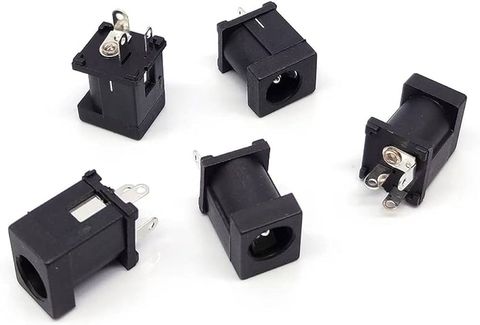
Board Mount Power Supply Accessories: Essential Guide, Basics, and Key Insights
Last Update: March 02, 2026
Read