Fabric Spreading Machines Explained: Basics, Uses, Types, and Key Facts to Know
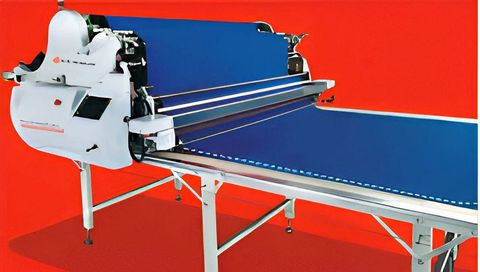
Fabric spreading machines are industrial systems used to lay fabric layers smoothly and evenly before cutting in garment and textile manufacturing. They exist to replace manual fabric laying, which can be slow, inconsistent, and physically demanding.
By automating fabric alignment and tension control, these machines help create uniform fabric lays that match pattern requirements.
In modern apparel and textile production, accuracy at the spreading stage is essential. Any misalignment, wrinkles, or uneven layers can lead to material waste and sizing errors later in the cutting process. Fabric spreading machines were developed to address these early-stage issues and to support higher production volumes with predictable quality.
Today, these machines are widely used across woven, knitted, and technical textiles. They operate as a critical link between fabric inspection and fabric cutting, supporting automated and semi-automated production lines.
Importance
Fabric spreading machines matter because they directly influence fabric utilization, cutting precision, and overall production efficiency. They affect multiple stakeholders across the textile value chain.
Why this topic matters today
-
Apparel production volumes continue to rise globally, increasing the need for consistency and speed.
-
Manufacturers are under pressure to reduce material waste and improve resource efficiency.
-
Automation is becoming central to maintaining quality standards in large-scale operations.
Who it affects
-
Garment manufacturers and textile mills
-
Pattern engineers and cutting room operators
-
Quality control teams and production planners
Problems it helps solve
-
Uneven fabric layers that cause cutting defects
-
Manual handling fatigue and human error
-
Inconsistent fabric tension across long lays
By ensuring controlled spreading, these machines support better downstream outcomes, including accurate cutting and reliable garment sizing.
Types of Fabric Spreading Machines
Fabric spreading machines vary based on fabric type, production volume, and automation level.
Manual and semi-automatic systems
-
Operator-guided movement along the spreading table
-
Suitable for smaller production runs and varied fabric types
Automatic fabric spreading machines
-
Motor-driven movement with programmable controls
-
Used in high-volume manufacturing environments
Fabric-specific designs
-
Knit fabric spreaders with low-tension control
-
Woven fabric spreaders with edge alignment systems
-
Technical textile spreaders for coated or layered materials
End-based and face-to-face spreading
-
One-way spreading for directional fabrics
-
Zigzag spreading for balanced tension and symmetry
How Fabric Spreading Machines Work
Fabric spreading machines follow a structured operational sequence designed for accuracy.
-
Fabric roll placement on a cradle or holder
-
Controlled fabric feeding across the table
-
Edge alignment using sensors or mechanical guides
-
Layer counting and automatic stop mechanisms
Below is a simplified process flow table.
| Stage | Function | Outcome |
|---|---|---|
| Fabric loading | Holds fabric roll securely | Stable feeding |
| Spreading motion | Moves fabric across table | Even layer placement |
| Alignment control | Maintains straight edges | Reduced cutting errors |
| Layer monitoring | Tracks number of layers | Pattern accuracy |
This systematic approach ensures repeatable results across multiple production cycles.
Recent Updates
Over the past year, fabric spreading machines have continued to evolve alongside broader manufacturing automation trends.
2025 updates and trends
-
Early 2025: Increased adoption of sensor-based edge detection for improved alignment accuracy
-
Mid-2025: Integration of digital dashboards to monitor spreading speed, fabric length, and layer counts
-
Late 2025: Wider use of energy-efficient drive systems to reduce operational power use
Another notable trend is the compatibility of spreading machines with automated cutting tables. This integration supports smoother production flow and reduced handling between stages.
Manufacturers are also focusing on modular designs, allowing machines to adapt to different fabric widths and lay lengths without major mechanical changes.
Laws or Policies
Fabric spreading machines are influenced indirectly by workplace safety, machinery standards, and industrial automation policies.
Common regulatory influences
-
Occupational safety rules covering machine guarding and operator protection
-
Electrical and mechanical compliance standards for industrial equipment
-
Environmental policies encouraging efficient material usage and reduced waste
Regional examples
-
In India, factory safety regulations emphasize safe machine operation and worker training
-
In the European Union, machinery directives focus on risk reduction and conformity marking
-
In the United States, workplace safety standards address equipment operation and maintenance practices
While fabric spreading machines are not usually regulated by product-specific laws, compliance with general industrial standards is essential for lawful operation.
Tools and Resources
Several tools and resources support the effective use and understanding of fabric spreading machines.
Helpful tools and platforms
-
Textile production planning software for lay optimization
-
Fabric consumption calculators used during pre-production planning
-
Industry standards documentation from textile and manufacturing bodies
Learning and reference resources
-
Technical manuals provided by machine manufacturers
-
Textile engineering textbooks covering cutting room processes
-
Trade publications focusing on apparel manufacturing automation
Operational aids
-
Preventive maintenance checklists
-
Fabric inspection templates used before spreading
-
Production tracking dashboards integrated with spreading equipment
These resources help improve machine utilization, accuracy, and long-term reliability.
Performance Factors to Consider
Several technical factors influence how well a fabric spreading machine performs.
-
Fabric type and elasticity
-
Maximum lay height and table length
-
Speed control and braking accuracy
-
Alignment and tension adjustment mechanisms
The table below summarizes key performance indicators.
| Factor | Why it Matters |
|---|---|
| Speed consistency | Prevents fabric distortion |
| Edge accuracy | Supports precise cutting |
| Layer uniformity | Ensures size consistency |
| Operator interface | Reduces handling errors |
Understanding these factors helps production teams select suitable configurations for their specific needs.
FAQs
What fabrics can be used with fabric spreading machines?
Most machines handle woven, knitted, and nonwoven fabrics. Specialized models support elastic or technical textiles with controlled tension features.
Are fabric spreading machines fully automated?
Automation levels vary. Some machines are manual or semi-automatic, while others use programmable controls and sensors for fully automatic operation.
How do these machines reduce fabric waste?
They maintain straight edges, uniform layers, and consistent tension, which reduces cutting errors and leftover material.
Can one machine support different fabric widths?
Many modern machines include adjustable frames or modular components to accommodate varying fabric widths.
Do fabric spreading machines require skilled operators?
Basic operation is straightforward, but proper training improves accuracy, safety, and machine longevity.
Conclusion
Fabric spreading machines play a foundational role in modern textile and garment manufacturing. By automating the precise placement of fabric layers, they help improve accuracy, efficiency, and consistency across production processes. Recent advancements in sensors, digital controls, and energy-efficient systems reflect the broader shift toward smarter manufacturing environments.
As production volumes increase and quality expectations rise, understanding how fabric spreading machines work and how they are regulated becomes increasingly important. With the right tools, standards awareness, and operational practices, these machines continue to support reliable and scalable textile production.

You may also like...
Aluminum Foil Manufacturing Explained: Basics, Process, Facts, and Key Insights
Last Update: February 03, 2026
Read
Synthetic Leather Manufacturing Explained: An Informative Guide to Basics, Processes, and Key Facts
Last Update: February 03, 2026
Read
Hydro Turbine Manufacturing Explained: An Informative Guide to Basics, Processes, and Key Facts
Last Update: February 03, 2026
Read