Shot Blasting Machines Explained: Basics, Working Process, Uses, and Key Facts
Shot blasting machines are widely used industrial systems designed to clean, strengthen, or prepare surfaces by propelling abrasive media at high speed. They exist to solve a long-standing manufacturing challenge: how to treat metal, concrete, and composite surfaces efficiently, consistently, and at scale.
From heavy engineering plants to infrastructure projects, these machines help improve surface quality before coating, welding, or further processing. Their role has expanded as industries demand higher durability, tighter tolerances, and compliance with modern safety and environmental standards.
What Shot Blasting Machines Are and Why They Exist
Shot blasting machines are mechanical surface treatment systems that use steel shots, grit, or similar abrasives. The media is thrown onto a surface using turbines or compressed air. The impact removes contaminants such as rust, scale, and old coatings, while also altering the surface texture.
These machines were developed to replace slow, inconsistent manual cleaning methods. As industrial production volumes increased, manufacturers needed repeatable, automated solutions that could handle large components and continuous workflows.
Key characteristics explained in simple terms include:
-
High-speed abrasive projection
-
Controlled and enclosed blasting environment
-
Reusable blasting media through recovery systems
-
Consistent surface finish across large areas
Shot blasting is commonly applied to metal components, structural steel, pipelines, castings, and concrete floors.
Why Shot Blasting Machines Matter Today
In modern manufacturing and construction, surface preparation directly affects performance, durability, and safety. Shot blasting machines play a critical role in meeting these expectations.
Industries that rely on them include:
-
Automotive and transportation manufacturing
-
Steel fabrication and metal processing
-
Aerospace component production
-
Infrastructure and construction projects
-
Foundries and casting operations
The importance of shot blasting machines today can be understood through the problems they solve.
-
They improve coating adhesion by creating a controlled surface profile
-
They extend component life by removing corrosion and defects
-
They enable uniform quality in high-volume production
-
They reduce manual labor exposure to hazardous dust and debris
The demand for precision manufacturing, long-lasting infrastructure, and compliance-driven production has increased the relevance of automated surface treatment equipment. As a result, shot blasting remains a foundational process in industrial operations.
How Shot Blasting Machines Work in Practice
The working process of a shot blasting machine follows a closed-loop cycle designed for efficiency and consistency.
The basic steps are outlined below.
-
Abrasive media is loaded into the machine
-
Turbines or air nozzles accelerate the media
-
The media strikes the target surface at controlled angles
-
Contaminants and loose material are dislodged
-
Spent media is collected, cleaned, and reused
Different machine designs support different workflows.
-
Tumble-type machines handle small parts in batches
-
Roller conveyor systems treat long or flat components
-
Table-type machines rotate heavy workpieces
-
Continuous pass-through machines support large-scale production
The choice of abrasive type, blast speed, and exposure time determines the final surface condition.
Common Uses Across Industries
Shot blasting machines are not limited to one sector. Their versatility explains their widespread adoption.
Typical applications include:
-
Surface preparation before painting or coating
-
Rust and scale removal from steel structures
-
Descaling of hot-rolled metal products
-
Shot peening to improve fatigue strength
-
Concrete surface texturing for repairs
Below is a simple table showing example use cases and outcomes.
| Application Area | Primary Purpose | Resulting Benefit |
|---|---|---|
| Steel fabrication | Remove mill scale | Improved coating life |
| Automotive parts | Shot peening | Enhanced durability |
| Foundry castings | Cleaning residues | Dimensional accuracy |
| Concrete flooring | Surface roughening | Better bonding |
This broad applicability makes shot blasting machines a core asset in industrial ecosystems.
Recent Updates and Industry Trends (2025)
Over the past year, several notable trends have shaped the shot blasting machine landscape.
In March 2025, manufacturers increasingly integrated digital monitoring systems into blasting equipment. These systems track turbine speed, media flow, and wear patterns, supporting predictive maintenance strategies.
By July 2025, there was a visible shift toward energy-efficient turbine designs. Updated motor configurations and optimized blade geometry helped reduce power consumption while maintaining blasting performance.
In October 2025, environmental compliance became a stronger focus. New dust collection and filtration technologies were introduced to meet stricter emission and workplace air quality standards in multiple regions.
Key trends observed include:
-
Automation and sensor-based process control
-
Improved abrasive recycling efficiency
-
Lower noise and vibration designs
-
Increased use of modular machine layouts
These updates reflect broader industrial movements toward smart manufacturing and sustainable operations.
Laws, Regulations, and Policy Influence
Shot blasting machines are affected by occupational safety, environmental protection, and industrial compliance frameworks. Regulations vary by country, but common themes remain consistent.
In many regions, workplace safety laws require:
-
Enclosed blasting chambers
-
Effective dust extraction systems
-
Noise level controls
-
Operator safety interlocks
Environmental regulations often address:
-
Airborne particulate emissions
-
Abrasive waste handling
-
Energy efficiency reporting
For example, updated industrial safety standards introduced in 2024–2025 emphasized stricter monitoring of airborne dust levels in manufacturing facilities. These rules pushed equipment designers to improve filtration and sealing mechanisms.
Government-led infrastructure programs have also indirectly influenced the adoption of advanced shot blasting systems by setting higher durability and quality benchmarks for public projects.
Tools and Resources Related to Shot Blasting Machines
Several technical tools and resources help professionals understand, plan, and manage shot blasting processes.
Helpful resources include:
-
Surface roughness measurement charts
-
Abrasive size and hardness selection guides
-
Equipment maintenance scheduling templates
-
Industrial safety compliance checklists
The table below shows commonly referenced tools and their purpose.
| Tool or Resource | Primary Use |
|---|---|
| Surface profile gauge | Measure blast finish |
| Abrasive classification charts | Media selection |
| Maintenance logs | Equipment reliability |
| Safety audit templates | Regulatory alignment |
These resources support informed decision-making and consistent operational standards.
Frequently Asked Questions About Shot Blasting Machines
What is the difference between shot blasting and sand blasting?
Shot blasting typically uses metallic abrasives propelled by turbines, while sand blasting often relies on compressed air and mineral abrasives. Shot blasting is generally more controlled and suitable for industrial environments.
Can shot blasting damage the surface?
When properly configured, shot blasting improves surface quality. Incorrect abrasive selection or excessive intensity can alter dimensions, which is why process control is essential.
Is shot blasting suitable for non-metal surfaces?
Yes, certain machines and media are used for concrete and composite materials, particularly for surface preparation and texturing.
How often does blasting media need replacement?
Metallic abrasives are reused multiple times. Replacement frequency depends on media type, workload, and filtration efficiency.
Does shot blasting change material strength?
In processes like shot peening, controlled blasting can increase fatigue resistance by inducing compressive surface stresses.
Conclusion
Shot blasting machines remain a fundamental part of modern industrial surface treatment. They exist to provide reliable, scalable, and consistent solutions for cleaning, strengthening, and preparing surfaces across multiple sectors.
Their importance has grown alongside demands for durability, safety, and regulatory compliance. Recent developments in automation, efficiency, and environmental control show how this mature technology continues to evolve.

You may also like...

Artificial Turf Installation Explained: Complete Overview, Basics, Tips, Insights & Helpful Resources
Last Update: March 02, 2026
Read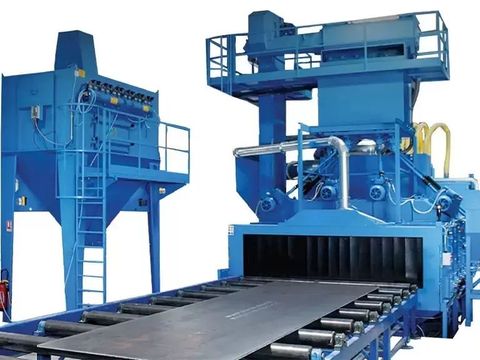
Shot Blasting Machines Explained: Basics, Working Process, Uses, and Key Facts
Last Update: March 02, 2026
Read
Construction Cleaning Services Explained: Discover Processes, Techniques, and Safety Insights
Last Update: February 20, 2026
Read